
Intent
At The Laurels Primary School, our intent is to equip our pupils with the knowledge, skills, and understanding to navigate and thrive in an increasingly digital world. We recognise the centrality of computing in modern life and seek to develop confident, responsible, and creative users of technology. Our computing curriculum, based on the National Centre for Computing Education (NCCE) scheme, is designed to build a strong foundation in computer science, digital literacy, and information technology.
Through a carefully sequenced curriculum, we aim to:
- Foster computational thinking, problem-solving, and creativity.
- Develop coding skills progressively from EYFS to Year 6 using Beebots, Scratch Jr, Scratch, Micro:bits, and Crumble controllers.
- Embed e-safety as a core aspect of digital learning, ensuring pupils understand how to use technology safely, respectfully, and responsibly.
- Prepare pupils for the next stage of education and future employment, ensuring they are digitally literate and able to adapt to new technologies.
- Promote inclusivity, ensuring all learners, regardless of background or need, can access and achieve in computing.
Implementation
Our computing curriculum is delivered through weekly timetabled lessons, supported by 1:1 device access in most classes, enabling high-quality, hands-on experiences. The NCCE curriculum is fully embedded across the school, ensuring consistency and progression across year groups.
Key features of our implementation include:
- EYFS and KS1: Early exposure to algorithms and programming through Beebots and Scratch Jr, developing basic coding and problem-solving skills.
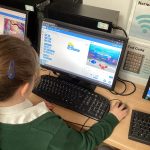
- KS2: Progressive development of coding through Scratch, Micro:bits, and Crumble Controllers, embedding concepts such as variables, loops, conditionals, and debugging.
- E-safety: A whole-school approach to online safety, with a dedicated focus each term. All year groups engage in developmentally appropriate lessons linked to the same overarching theme, reinforced through the Learning for Life curriculum.
- Pedagogy: Teaching is informed by evidence-based principles of effective instruction, including challenge, explanation, modelling, questioning, feedback, and deliberate practice, aligned with EEF recommendations.
- Cross-curricular links: Opportunities are provided to apply computing knowledge across other curriculum areas, supporting real-world problem-solving and interdisciplinary learning.
- Staff development: Ongoing professional development ensures staff confidence and subject knowledge are continually enhanced, enabling high-quality delivery.
Impact
The impact of our computing curriculum is evidenced through:
- Pupils who are confident, independent, and responsible users of technology.
- Strong pupil outcomes in computing knowledge and skills, assessed through ongoing teacher assessment, retrieval practice, and end-of-unit tasks.
- Demonstrable progression in coding and computational thinking across all year groups.
- A secure understanding of e-safety, demonstrated in both computing lessons and pupils’ wider use of technology.
- High levels of engagement and enthusiasm for computing, reflected in pupil voice and participation.
- Readiness for the digital demands of secondary education and future careers.
We regularly review and adapt our curriculum to ensure it remains current, relevant, and ambitious for all pupils.
Our curriculum in action